Wiring Inspections & Rewiring

Wiring and Rewiring Services in Newmarket

Need Newmarket house rewiring for an older home? We handle knob and tube removal, aluminum wiring repair, and full or partial rewiring, with as few wall openings as possible and the documentation your insurer may ask for.

ESA permits & Certificate of Acceptance
Minimal wall openings
Insurance-ready documentation
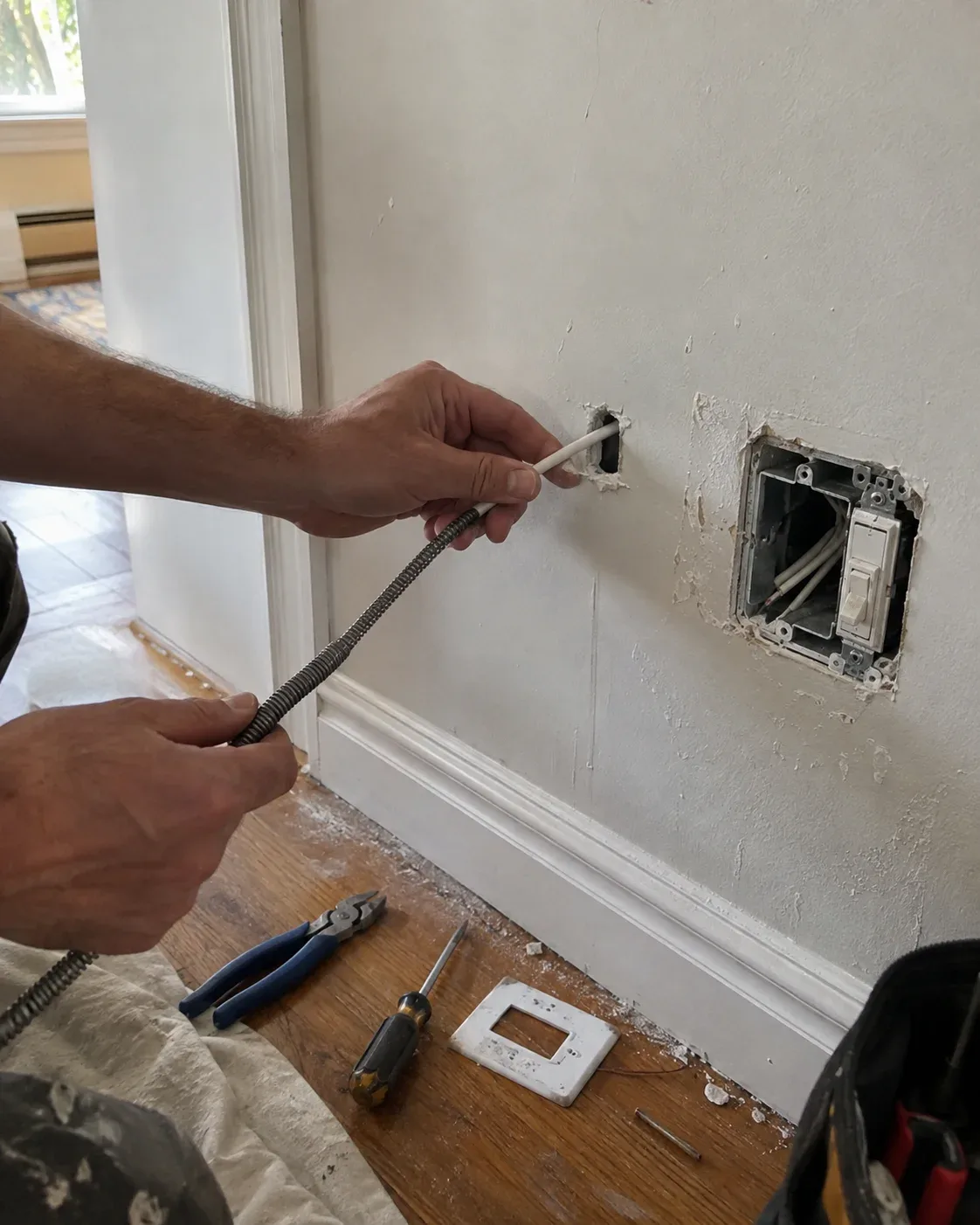
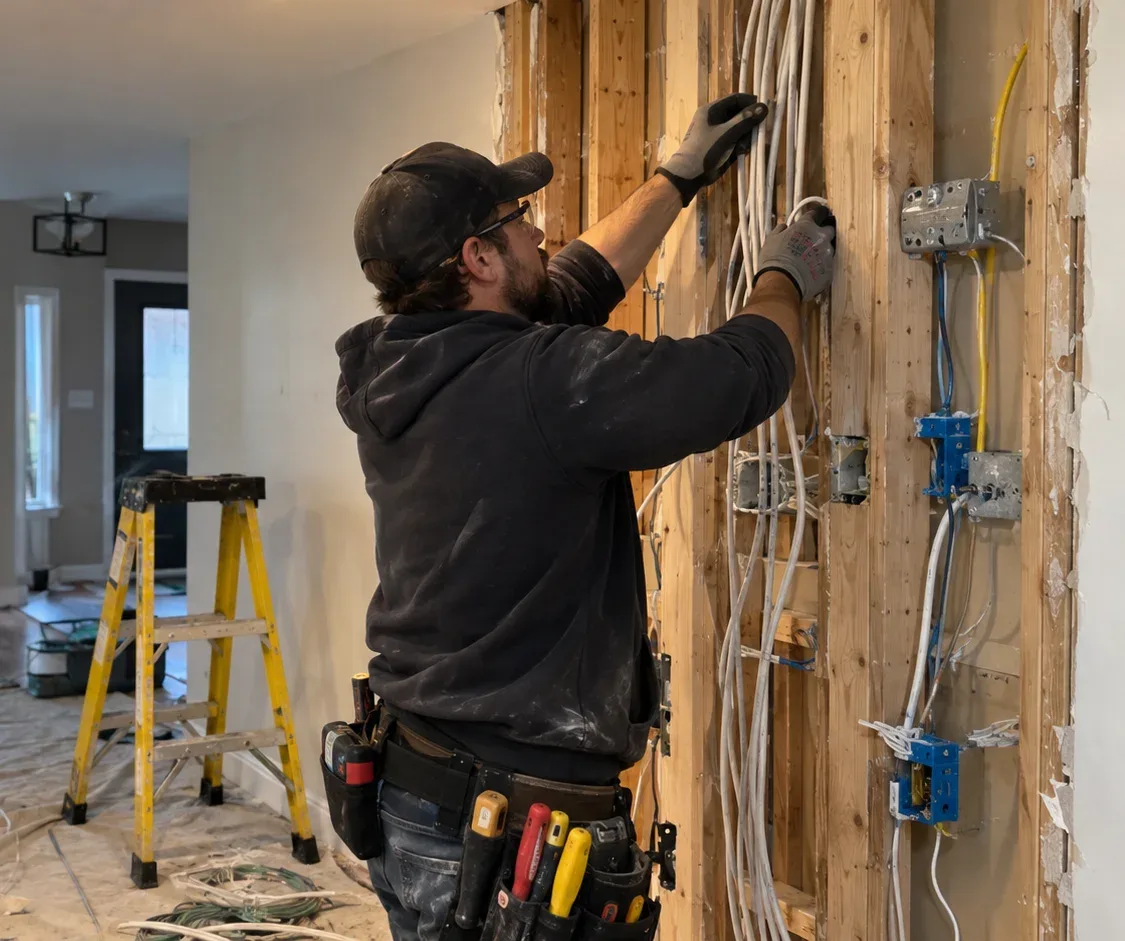
Electrician pulling new cable through a small wall opening in an older home

What Brought You Here?

Choose your situation to find the information you need.

Burning smell or sparks right now? Call our 24/7 emergency electrician for immediate assistance.

Wiring Identification Guide

Knob and Tube, Cloth or Aluminum Wiring? How to Tell What's in Your Home

Not sure what type of wiring is in your home? Start by looking for visible clues in the basement, attic, around the electrical panel, or behind older receptacles. The type of wiring matters because it affects safety, insurance questions, renovation planning, and whether older ungrounded outlets may still be present.

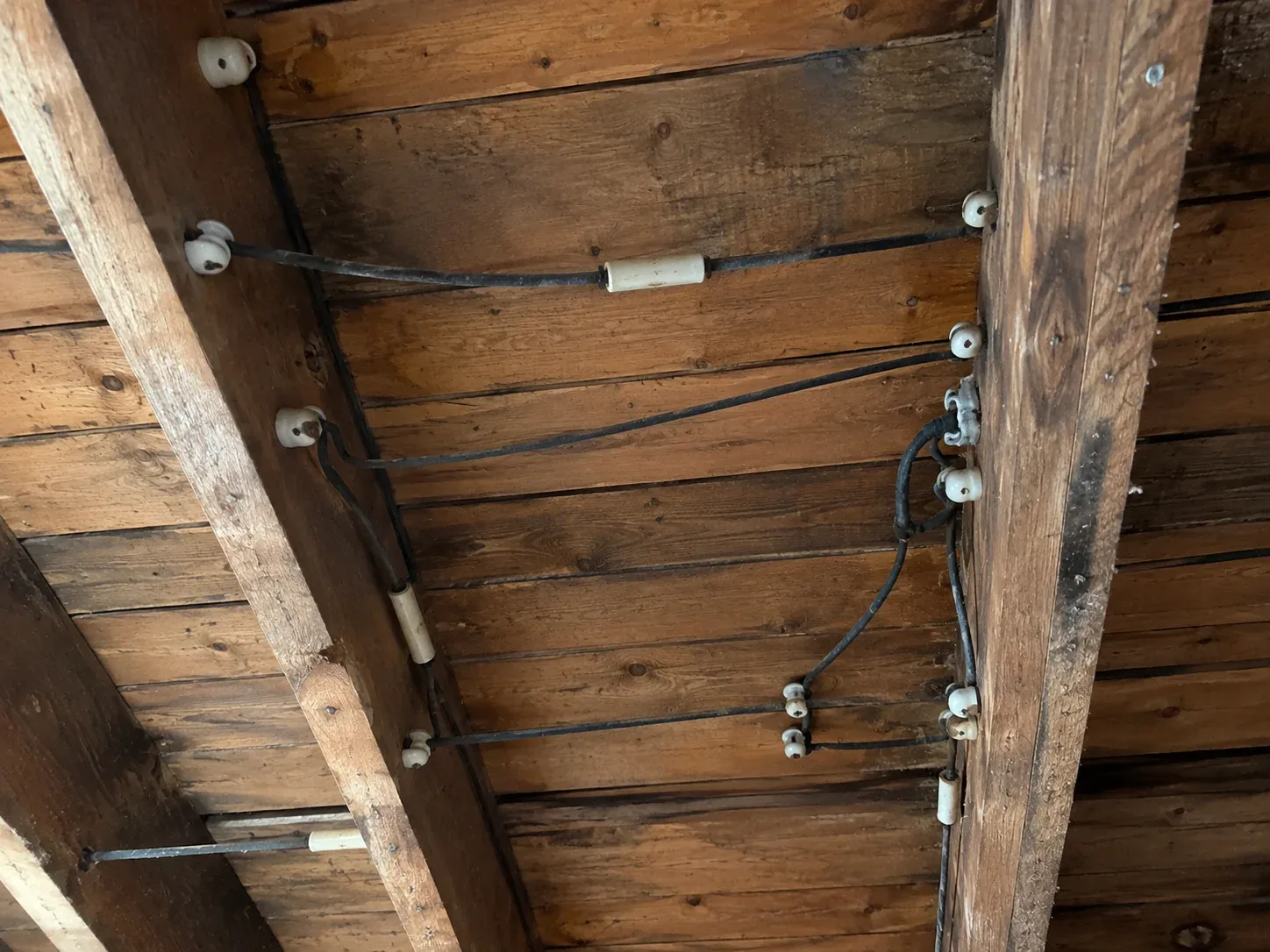
Knob and tube wiring with porcelain knobs and tubes on exposed basement joists

Knob and Tube Wiring

Higher Review Priority

How it looks

Single conductors run separately on porcelain knobs and pass through framing with porcelain tubes. It usually appears on exposed basement joists or in attics.

Typical years

Common in older homes and generally associated with installations dating to the 1950s or earlier.

Where to look

Unfinished basements, attics, open framing, and areas where old circuits are visible before they disappear into finished walls.

Why it matters

Older systems may not provide grounding and can raise insurance or renovation concerns. Homes with knob and tube wiring often also have ungrounded outlets.
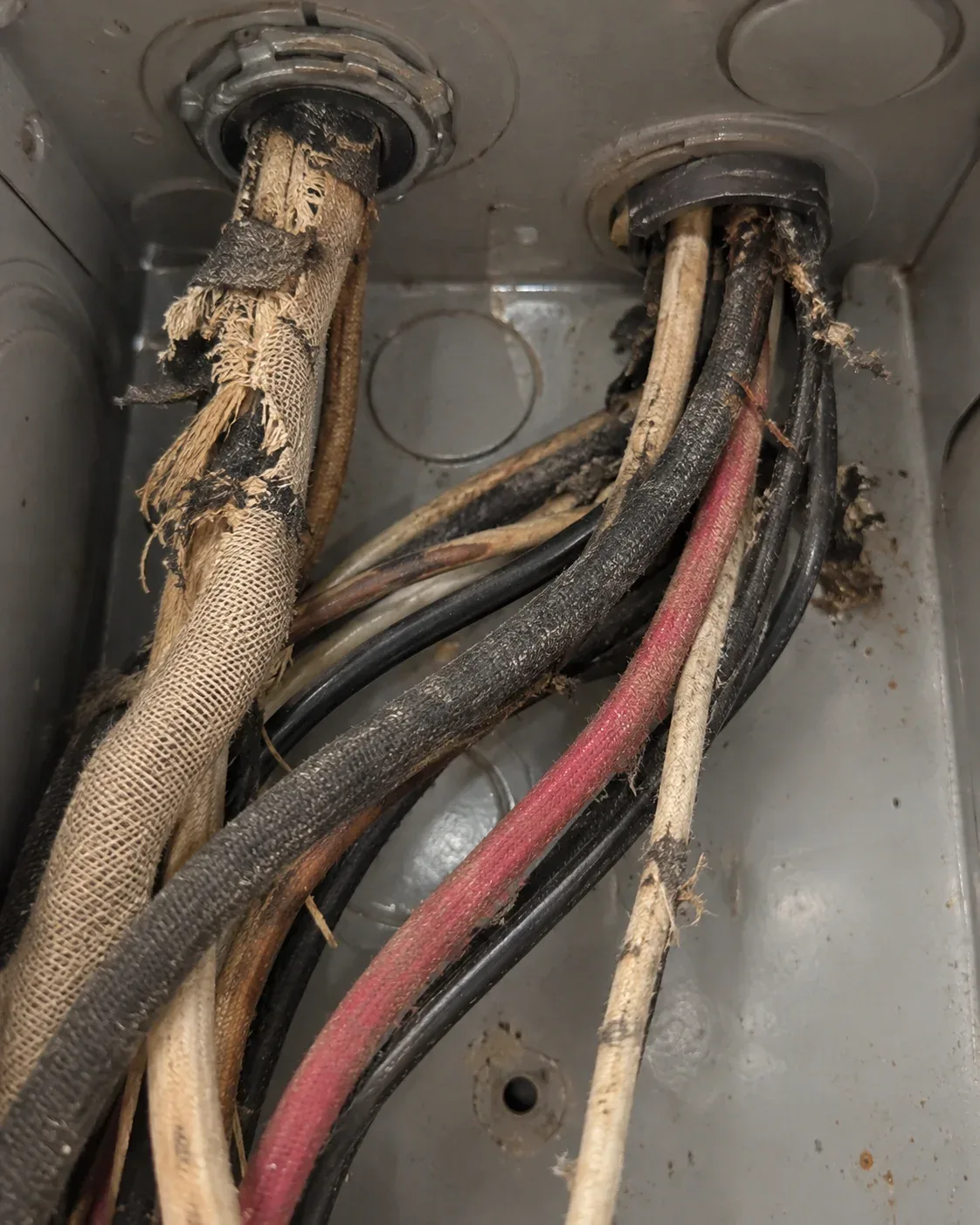
Close-up of older cloth wiring with fabric-style insulation

Cloth Wiring

Older System

How it looks

The cable insulation has a woven or fabric-like outer layer rather than the plastic jacket seen on modern wiring. It may appear dry, frayed, or brittle with age.

Typical years

Common in many older homes from the mid-1900s, especially where original or partially updated wiring remains in place.

Where to look

Near the electrical panel, inside unfinished ceilings, at basement runs, and sometimes at older receptacle or light fixture boxes.

Why it matters

Age and heat can weaken the insulation. It is often a sign that the home needs a closer wiring assessment before renovation or resale.

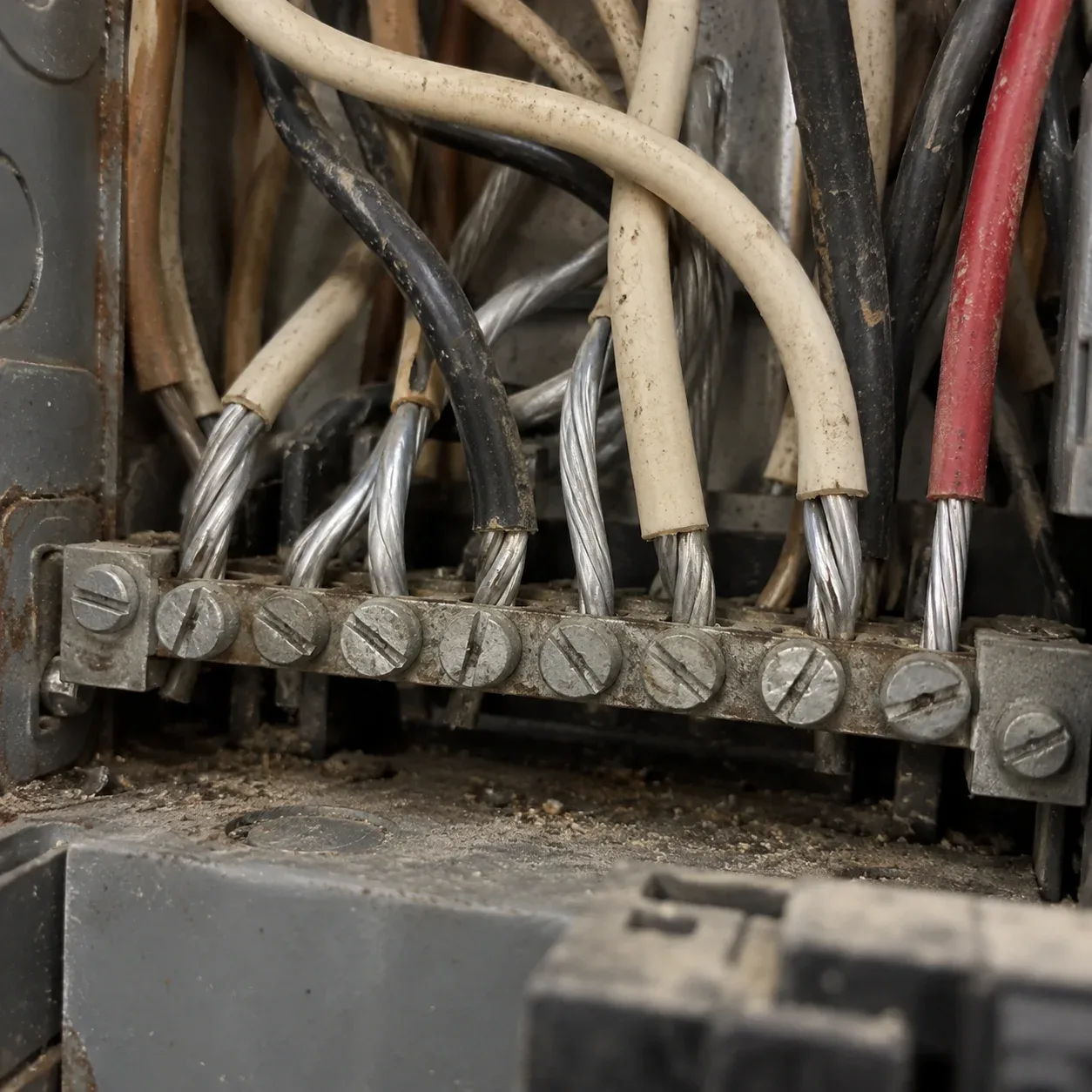
Close-up of aluminum wiring with silver conductor and AL marking near the jacket

Aluminum Wiring

Needs Review

How it looks

The conductor appears silver rather than copper-coloured, and the cable jacket or conductor markings may include “AL”.

Typical years

Most often associated with homes wired roughly from 1965 through the late 1970s.

Where to look

At the electrical panel, behind switches and receptacles, or on visible cable runs where jacket markings can still be read.

Why it matters

Connection quality is especially important. Insurers, buyers, and renovators often want to know whether aluminum wiring is present and how it has been addressed.

Modern copper house wiring with plastic-sheathed cable for comparison

Modern Copper Wiring

Reference

How it looks

Plastic-sheathed modern cable with copper-coloured conductors. Grounding conductors are typically included, unlike many older systems.

Typical years

Common in later rewiring work and in newer installations, especially after older systems were replaced or upgraded.

Where to look

At the panel, in newer basement or renovation wiring, and behind modern grounded outlets and switches.

Why it matters

This card gives you a comparison point when checking whether parts of the home have already been rewired or updated.

A Newmarket Note

The oldest homes in Central Newmarket, especially around the Main Street area, are among the strongest candidates for knob and tube wiring or other older electrical systems. If you're buying, renovating, or answering insurance questions, it makes sense to have the wiring identified before making decisions.

Older Home Wiring

Knob and Tube Removal in Newmarket

Knob and tube wiring was common in older Ontario homes. While a properly maintained installation is not automatically unsafe, aging insulation, ungrounded circuits, and changes made over the years can raise safety concerns. Some insurance companies require an electrical assessment or replacement before providing or renewing coverage.

Why Insurers Raise Concerns

Older insulation, the absence of equipment grounding, overloaded circuits, and undocumented alterations can increase uncertainty about a home's electrical condition. Insurance requirements vary by provider.

What Removal Involves

Knob and tube wiring removal starts with identifying active circuits and planning replacement routes. Our team can install modern copper wiring, disconnect retired circuits, and remove accessible old conductors as the work requires.

Partial or Full Replacement?

Partial knob and tube replacement may be appropriate when only certain circuits need upgrading. Full replacement may be necessary when the system is widely deteriorated or your insurer requires all active knob and tube circuits to be replaced.

Searching for knob and tube removal near me? Our electrician assesses your wiring on site, explains the recommended work, and provides a price. Work begins only after you approve the quote.

Document Checklist
Before Your Insurance Deadline

What You May Need for Your Insurer

Confirm which records your insurance provider requires before starting the project.

ESA Certificate of Acceptance

Issued after ESA reviews and accepts the notified electrical work. A copy can be provided for your records.

Written Inspection Findings

A record describing the wiring condition and recommended action, if included in the agreed inspection scope.

Circuit-by-Circuit Work Summary

A breakdown of replaced circuits and disconnected old wiring, where requested and agreed as part of the work.

Insurer requirements differ. Confirm the documentation needed and whether partial replacement is acceptable before approving the project.

Documentation Planning
Understanding Your Options

Aluminum Wiring Repair & Replacement in Newmarket

Aluminum wiring does not always need complete replacement. The condition of its connections, the existing devices, and your insurer's requirements help determine whether aluminum wiring repair or new copper circuits are appropriate.

Your Options

Common approaches to aluminum wiring connections and replacement.

Final method determined after inspection
01 AlumiConn Pigtailing
When suitable

Some aluminum-wired outlets, switches, and other terminations where a copper pigtail is appropriate.

What to know

Aluminum wiring pigtailing uses an approved connector to join the aluminum conductor to a short copper lead. AlumiConn uses separate mechanical terminals. Connector approval, installation torque, and available box space must be checked.

02 COPALUM Crimp
When suitable

Specialized aluminum-to-copper connection remediation where the system and installer are available and approved.

What to know

COPALUM uses a specialized crimping system and requires manufacturer-trained installers. Availability and suitability for an Ontario installation must be verified before considering this method.

03 CO/ALR Devices
When suitable

Certain receptacles and switches designed and marked for compatible aluminum conductors.

What to know

CO/ALR-rated devices provide suitable terminals for specific applications. They do not resolve other connections in the circuit, and device selection is limited to properly approved products.

04 Full Copper Replacement
When suitable

Widespread wiring deterioration, major renovations, or an insurance requirement for aluminum wiring replacement.

What to know

Existing aluminum branch circuits are replaced with modern copper wiring. This usually requires greater investment and wall access, but removes the old aluminum branch conductors from service.

These are general repair methods for comparison, not a list of methods available on every project. All electrical connections must use equipment approved for Ontario and follow the applicable code and manufacturer requirements.

What Will Your Insurance Company Accept?

Aluminum wiring insurance requirements vary across Ontario. Some providers request an electrical assessment and proof of completed corrective work, while others may require full copper replacement. An ESA Certificate of Acceptance may be requested after the relevant work has been accepted.

Ask your insurer for its requirements in writing. Our team can review the wiring on site, discuss suitable work, and explain the applicable ESA process before you approve the project.

Is Aluminum Wiring Safe?

Aluminum wiring is permitted in Ontario and can be safe when properly installed and terminated. Problems commonly occur at loose, damaged, or incompatible connections, where overheating can develop.

A professional assessment helps determine whether the existing wiring can remain in service with appropriate corrections or whether replacement is the better option. Do not open outlets or electrical panels to inspect live connections yourself.

Unsure Whether Your Wiring Needs Repair or Replacement?

Looking for aluminum wiring repair near me? We assess the wiring on site, explain the recommended solution, and provide a price before starting work. Nothing proceeds without your approval.

Book a Wiring Inspection
Our Rewiring Process

Rewiring Your Home Without Gutting the Walls

Replacing old wiring doesn't always mean stripping every wall. We plan cable routes carefully, use existing access points where possible, and work through the home in stages to limit unnecessary damage.

01

Inspection & Circuit Map

Identify old wiring, active circuits, and the areas requiring replacement.

02

Plan & ESA Notification

Plan the routes, review the scope and price, obtain your approval, and file the required notification.

03

Room-by-Room Rewiring

Run modern copper wiring through planned access openings, keeping disruption as limited as practical.

04

ESA Inspection

Arrange the required ESA reviews and inspections before concealed wiring is covered.

05

Final Checks & Documentation

Confirm the wall patching arrangements and obtain the ESA Certificate of Acceptance once the work is accepted.

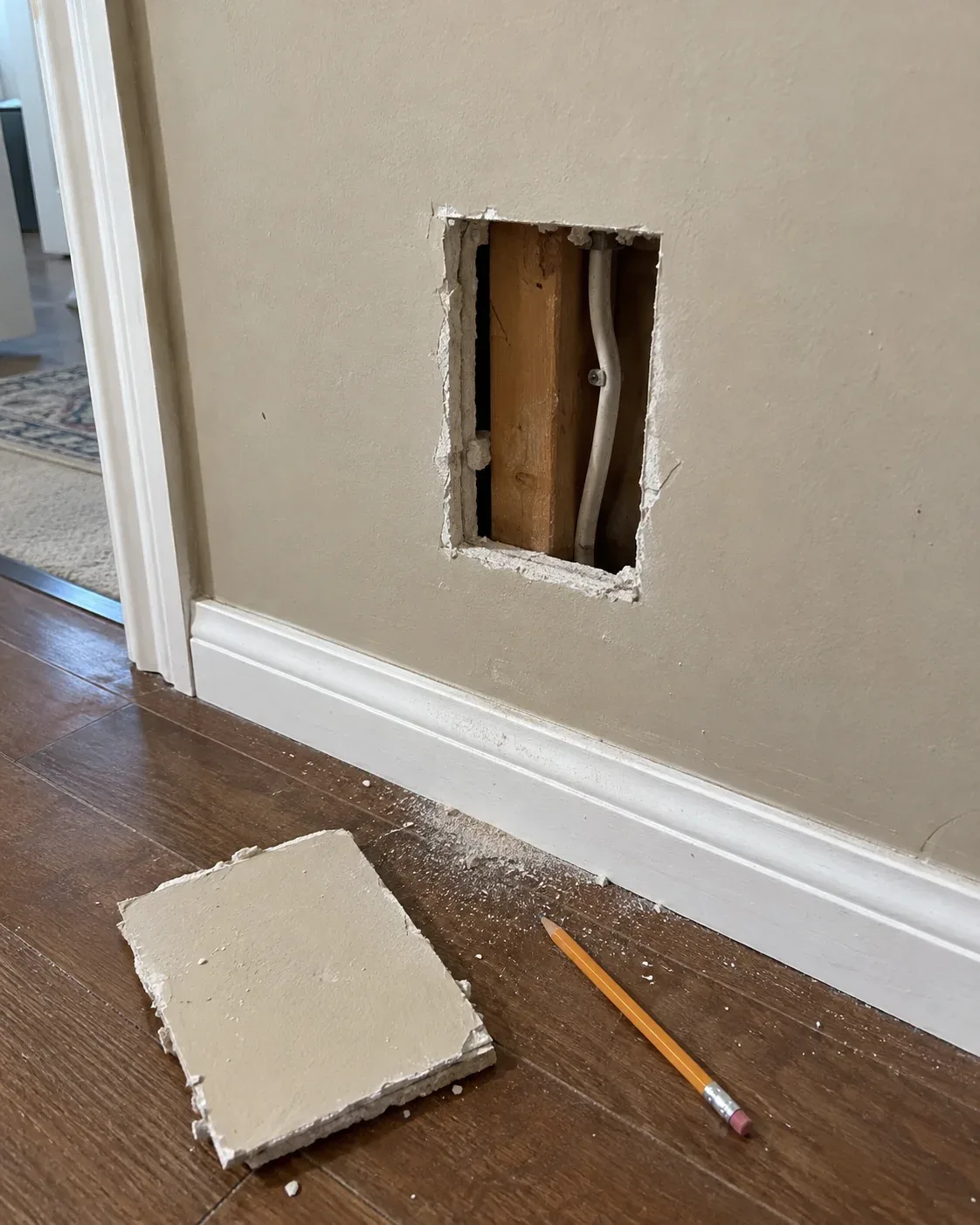
Small access opening in a wall prepared for residential electrical rewiring 01 / ACCESS
Small, planned wall openings
Electrician using fish tape to route new electrical cable through a wall 02 / ROUTING
New cables routed through the home
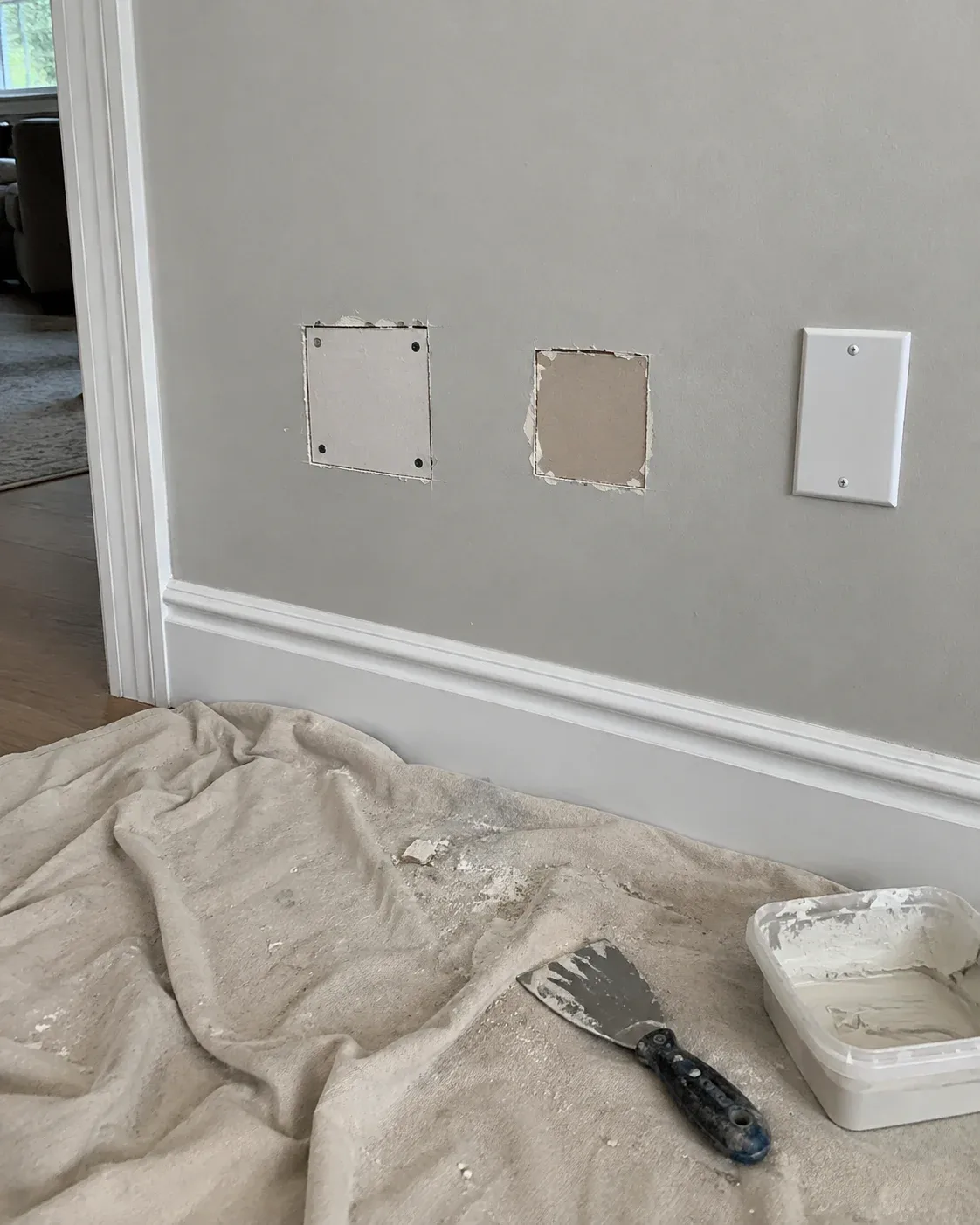
Wall access opening after electrical wiring work, prepared for drywall patching 03 / FINISH
Access areas identified for patching

How Long Does House Rewiring Take?

Electrical rewiring timelines depend on the home's size, number of circuits, wall construction, and access. Partial work may be completed in stages, while a full replacement requires a more detailed schedule.

Can You Stay Home During the Work?

Often, yes, when rewiring can be completed in phases. Temporary power shutoffs and access restrictions may still be necessary. We'll discuss the practical arrangements during the on-site assessment.

Planning to Replace Old Wiring?

Searching for house rewiring near me? Start with an inspection. We'll assess the wiring, explain the options, and quote the work on site before you decide.

Book a Wiring Inspection
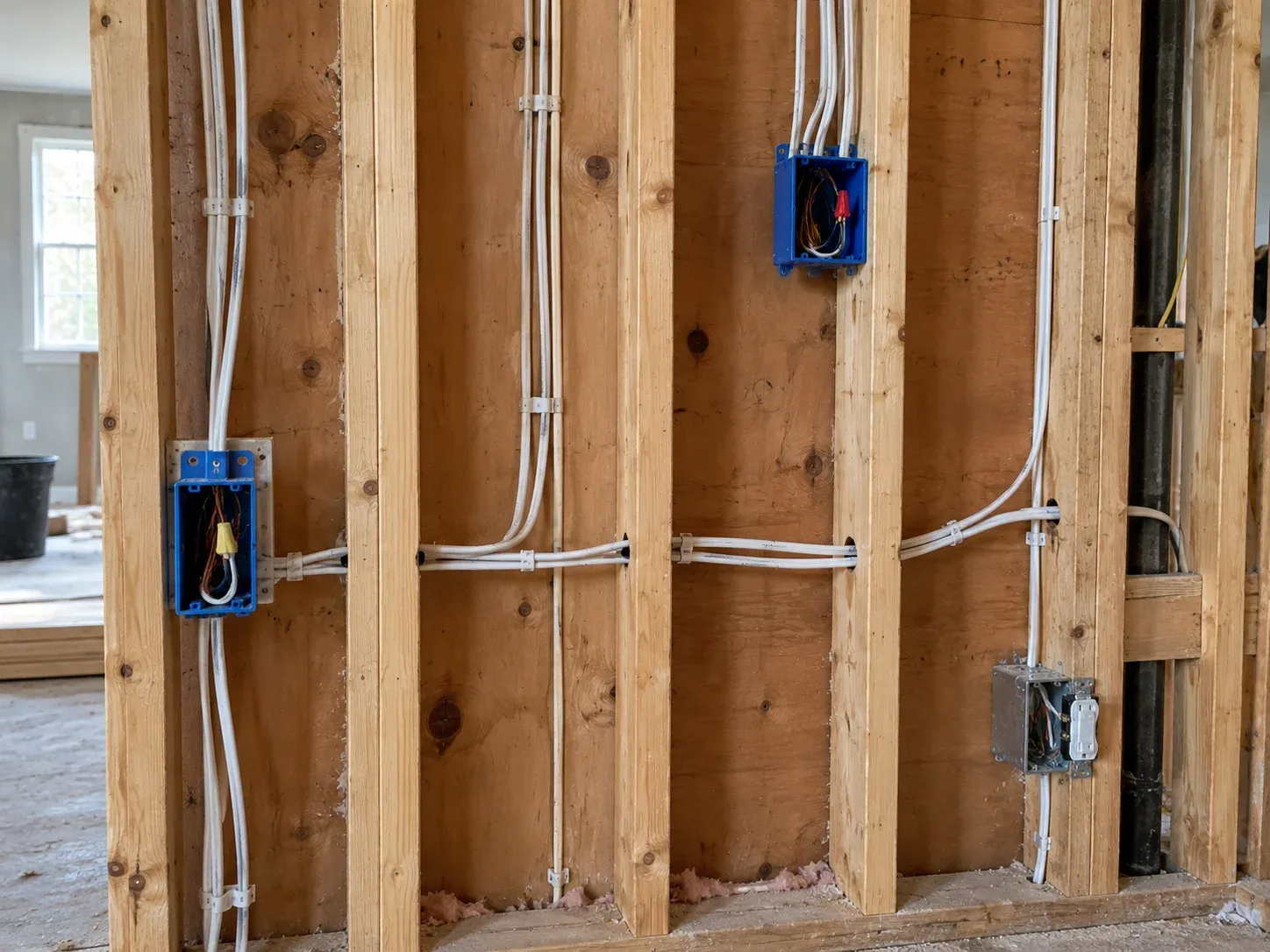
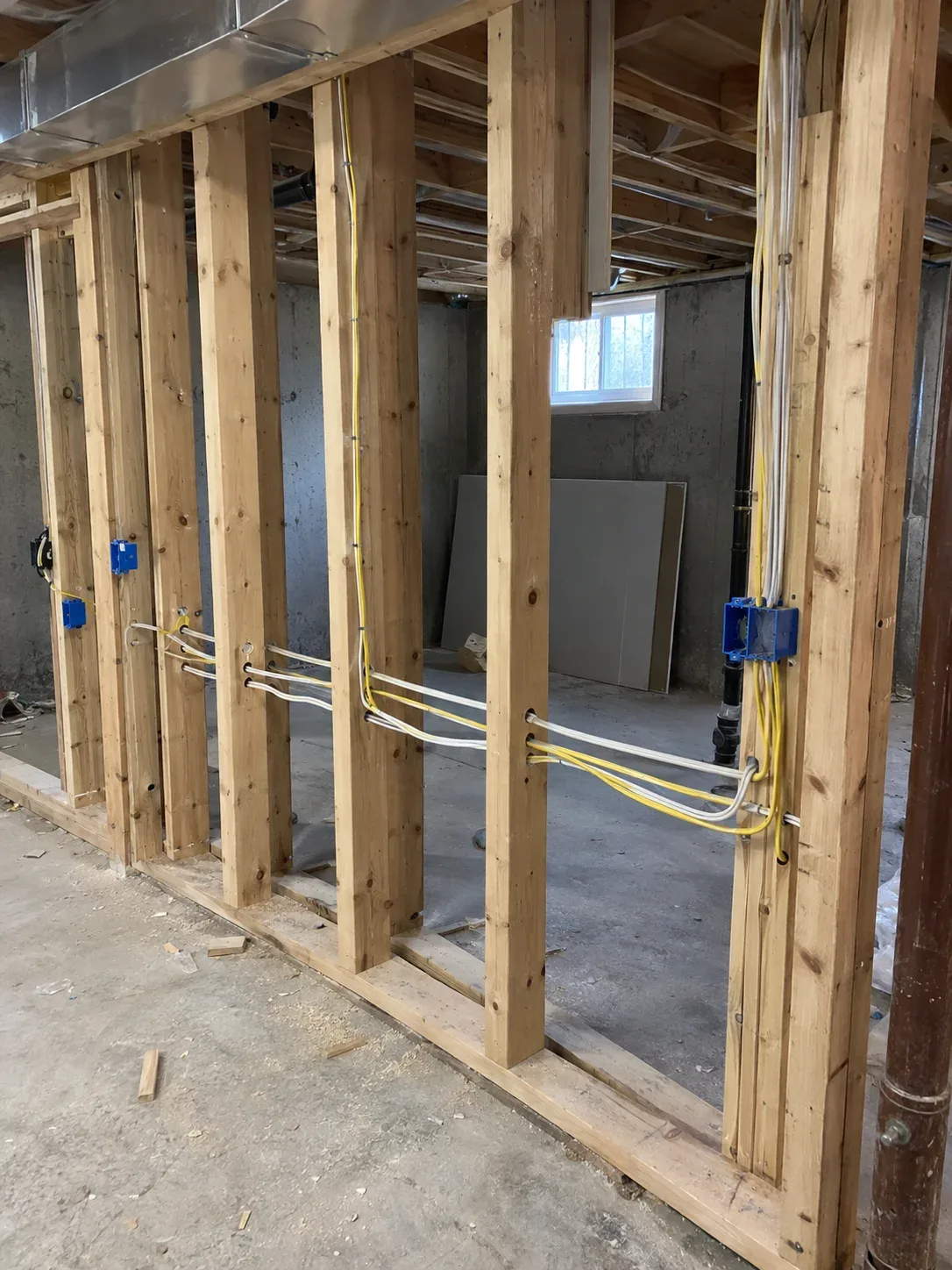
Open basement framing with neat new electrical wiring installed before drywall
Renovation & Basement Projects

Electrical Wiring Services in Newmarket for Renovations & Basements

We provide electrical wiring services for renovation projects, basement finishing, and home layout changes. That can include new circuits for kitchens and basements, basement wiring for added rooms or a basement apartment, and updates to older home wiring before insulation and drywall go in.

New circuits for kitchens and finished basements

Renovation work often requires additional electrical wiring for appliances, countertop receptacles, lighting, dedicated outlets, and basement rooms.

Basement apartment and secondary living space wiring

Basement wiring may include receptacles, lighting, bathroom and laundry circuits, smoke and carbon monoxide devices, and the wiring layout needed before the walls are closed.

The right time to do the wiring is before drywall

Rough-in electrical work should be planned and completed before insulation and drywall. That helps avoid reopening finished walls later and allows the installation to be inspected at the proper stage.

Replacing older two-prong outlets where grounding can be provided

During home wiring upgrades, some older two-prong receptacles can be replaced with grounded outlets where the wiring method and project scope make that possible.

Planning Renovation Electrical Work

Electrical wiring for renovations depends on the layout, number of new circuits, existing panel capacity, and what part of the home is being changed. We review the scope on site, explain what should be done before drywall, and provide pricing before work starts.

For outlet repairs and everyday electrical work, see our Newmarket electrician services .

Customer Feedback

Wiring & Rewiring Customer Reviews

See the kinds of wiring projects homeowners contact us about, from insurance-related upgrades to renovations and replacing older electrical systems.

★★★★★
"Our insurance company gave us a deadline to replace the old knob and tube wiring. We were worried the work would take forever, but the crew went through the house, explained which circuits were still active and planned the replacement around our schedule. Everything was completed before the renewal date. Huge relief."

Meredith C.

Central Newmarket

★★★★★
"I thought replacing the wiring meant tearing apart our plaster walls. They showed us where the cables could run and kept the access holes much smaller than I expected. There was still some patching to do, obviously, but nowhere near the mess I'd imagined."

Graham L.

Gorham-College Manor

★★★★★
"What impressed me most was that they didn't immediately tell us to rewire the whole house. After checking everything, the electrician explained which areas had already been updated and which older circuits needed replacing. We agreed on a smaller job and knew exactly what we were paying for."

Patrice N.

Bristol-London

★★★★★
"Aluminum wiring came up during the inspection of a house we were buying. We booked a separate electrical assessment before making our final decision. The electrician checked the connections and explained what would need attention, what could stay, and what the different options involved. It made a pretty stressful purchase easier to understand."

Devika S.

Huron Heights-Leslie Valley

★★★★★
"Had the basement wiring done before drywall went up. They ran the new circuits for the outlets, lighting and laundry area, then walked us through the layout. The work was tidy and the next trades were able to carry on as planned."

Oliver T.

Stonehaven-Wyndham

★★★★★
"We changed the kitchen layout and needed the wiring moved before the cabinets arrived. The electrician went over the new appliance locations with us and pointed out a couple of circuits that would need updating. The price was explained after the visit, and the installation went according to the plan we'd approved. Happy with how it turned out."

Felicity R.

Summerhill Estates

Helpful Wiring Advice

Wiring & Rewiring FAQs

Answers to common questions about replacing older wiring, insurance requirements, renovation planning, and rewiring costs in Ontario.

How much does it cost to rewire a house in Ontario?

The cost to rewire a house in Ontario depends on the size of the property, number of circuits, existing wiring condition, and access through walls or unfinished spaces. Partial rewiring usually involves less work than replacing every branch circuit, but the actual price requires an on-site assessment.

Six factors have the greatest influence on the quote:

House size & circuits More rooms and circuits mean more cable, devices, and labour.
Plaster or drywall Older plaster can require more careful access and restoration.
Attic & basement access Open framing often makes routing easier than finished spaces.
Partial or full rewiring Replacing selected circuits differs from rewiring the entire home.
Electrical panel condition Existing capacity and equipment may affect the scope.
ESA requirements Notifications, reviews, and applicable fees form part of planning.

Our electrician inspects the property, determines the required work, and provides a price on site. You decide whether to proceed, and no repair work begins without your approval.

Is knob and tube replacement more expensive than regular rewiring?

Knob and tube replacement cost can be higher when old wiring is concealed behind plaster, several floors must be accessed, or original circuits have been modified over time. The price is not determined by the age of the wiring alone. The number of active circuits requiring replacement and access to their routes are more important.

Our team checks which circuits remain active, whether partial replacement is appropriate, and how new cable can be routed. After examining the house, the electrician explains the scope and quotes the work before you approve it.

Is repairing aluminum wiring cheaper than replacing it with copper?

Repairing suitable aluminum wiring connections can cost less than replacing entire circuits because much of the existing cable remains in place. Aluminum wiring replacement cost increases with the number of circuits, wall access requirements, and any necessary panel changes. However, connection repairs are not appropriate for every installation.

Our team assesses the wiring condition and discusses the available corrective options, including replacement where necessary. The electrician determines the recommended approach and provides the price during the on-site visit.

My insurance company won't renew my policy because of knob and tube wiring. What are my options?

Some Ontario insurers require knob and tube wiring to be replaced before issuing or renewing coverage. Others may request an electrical assessment or evidence of corrective work. The first step is to ask your insurer exactly what must be completed and whether partial replacement is acceptable.

We inspect the existing circuits, identify which wiring remains in service, and assess the required replacement. Our electrician explains the proposed work and its cost on site. An ESA Certificate of Acceptance is available after the applicable notified work has been reviewed and accepted, but your insurer makes the final coverage decision.

A home inspector found aluminum wiring in the house we're buying. Should we walk away?

Finding aluminum wiring does not automatically mean a house is unsafe or unsuitable to purchase. In Ontario, aluminum conductors are permitted when installed and terminated correctly. The important questions are whether connections are in good condition, compatible devices are used, and the property can meet your insurer's requirements.

Before making a purchase decision, arrange a focused electrical assessment. Our team can inspect accessible connections and wiring conditions, explain the findings, and quote any necessary corrections on site.

Do I have to replace all the aluminum wiring, or can pigtailing with AlumiConn be enough?

Full replacement is not automatically required for every aluminum-wired home. Aluminum wiring pigtailing uses an approved connector to create a suitable transition between conductors. AlumiConn is one example of a mechanical connector, but its suitability depends on the installation, product approval, conductor condition, and applicable code requirements.

Our team evaluates whether the wiring can remain in service with appropriate corrections or requires replacement. We explain the suitable options after inspection rather than assuming one connection method works for every property.

Our insurer wants a report on our aluminum wiring. What should it include?

Aluminum wiring insurance requirements in Ontario differ by provider. An insurer may ask for a professional electrical assessment, identification of the wiring type, connection condition, recommended corrective work, and proof of completed repairs. Some insurers may also request an ESA Certificate of Acceptance for notified electrical work.

Ask your insurer for its exact documentation requirements in writing. Our team can assess the wiring and explain the available inspection and repair scope, including which records can be arranged, before you approve the service. Acceptance of the documents remains the insurer's decision.

Can an older house be rewired without tearing out the plaster walls?

Many older houses can be rewired without removing every wall or ceiling. New cable can sometimes be routed through attics, unfinished basements, and carefully positioned access openings. However, plaster construction, concealed obstructions, and multi-storey layouts may require additional openings.

Our team examines the accessible routes before proposing a rewiring plan. We aim to limit unnecessary openings and explain where access will be needed. Wall patching and finishing arrangements are discussed as part of the project scope.

How long does it take to rewire a house, and can we stay home during the work?

Rewiring duration depends on the number of circuits, accessibility, home size, and whether the project involves selected rooms or the entire house. Occupants can sometimes remain home during phased work, but temporary power interruptions and restricted access may make certain areas inconvenient or unsafe to use.

After assessing your property, our electrician explains the expected sequence, necessary access, and any practical arrangements for occupants. We do not assign a fixed completion time before understanding the actual scope.

Our knob and tube wiring still works fine. Is it actually dangerous?

Knob and tube wiring is not automatically dangerous simply because it is old. A properly maintained installation may remain serviceable, but deterioration, missing grounding, overloading, or later modifications can introduce hazards. Working lights and outlets do not prove that concealed wiring is in good condition.

Our team assesses the accessible wiring, identifies active circuits, and checks for conditions requiring attention. If replacement is recommended, we explain whether selected circuits or a more extensive upgrade should be considered.

We found cloth-covered wiring in the basement. Is it knob and tube, and does it need replacing?

Cloth wiring is a broad description of cables or conductors with fabric-based coverings. It does not necessarily mean knob and tube. Some older cables have a woven outer sheath over separate insulated conductors, while knob and tube uses individually supported conductors and porcelain fittings.

The need for replacement depends on insulation condition, grounding, circuit alterations, and the planned renovation. Our team identifies the existing wiring method and recommends suitable updates after examining the installation.

We have 2-prong outlets. Can we just replace them with 3-prong outlets?

A three-prong receptacle does not create grounding by itself. If the existing circuit has no equipment bonding conductor or approved grounding path, installing an ordinary three-prong outlet can give a misleading impression of protection. Depending on the installation, a properly installed GFCI-protected solution or new grounded wiring may be appropriate under Ontario requirements.

GFCI protection does not provide an actual equipment ground. Our team checks the existing wiring and determines the compliant option, including any required protection, labelling, or replacement circuits. An electrical assessment is recommended before changing ungrounded outlets.

We're finishing our basement. What wiring should be completed before the drywall goes up?

Basement wiring should be planned before drywall to account for receptacles, lighting, switches, dedicated appliance circuits, and any proposed bathroom, laundry area, or secondary suite. The electrical rough-in must be completed and the required inspection or authorization obtained before wiring is concealed.

We review the proposed basement layout, existing panel capacity, and electrical requirements on site. Our team can plan and install the necessary circuits, arrange applicable ESA notifications, and coordinate electrical work with the renovation schedule.

Do we need an ESA permit to rewire our house in Ontario?

Yes. House rewiring in Ontario generally requires a notification of electrical work to the Electrical Safety Authority before installation begins. The process may involve rough-in and final reviews. Once the notified work has been reviewed and accepted, ESA issues a Certificate of Acceptance.

When you hire our licensed electrical team, we arrange the required notifications and explain the relevant inspection stages. We also discuss what documentation becomes available after acceptance and how it relates to your renovation or insurance requirements.

Not sure which option suits your home? Start with an on-site wiring assessment.

Book a Wiring Inspection
Residential Wiring Services

Request a Wiring & Rewiring Assessment

Concerned about older wiring or planning an electrical renovation? Leave your contact details and our team will reach out to arrange an on-site assessment in Newmarket.

Electrical service vehicle for residential wiring work

Home Wiring & Electrical Upgrades

Let's Take a Closer Look at Your Wiring

Knob-and-tube, aluminum or cloth-covered wiring? Renovating a kitchen or finishing a basement? Our electricians assess the existing wiring, explain suitable options and provide pricing before you approve the work.

Wiring Assessment Request

Send Your Request

Enter your contact information below. We'll get in touch to discuss your wiring concerns or renovation plans and arrange a property visit.

Want to discuss your wiring project?

(647) 493-0683
Homes We Rewire

Rewiring Across Newmarket

Newmarket's homes range from older properties near the historic downtown to subdivisions built in recent decades, and the wiring inside them varies just as much. We inspect and update knob and tube, aluminum, and outdated wiring in homes across the town.

Older Homes

Central Newmarket Gorham-College Manor Bristol-London Huron Heights-Leslie Valley

Homes built before the 1980s may still have original knob and tube, cloth-insulated, or aluminum branch wiring.

Newer Homes

Armitage Glenway Estates Summerhill Estates Stonehaven-Wyndham Woodland Hill

Newer homes may still need wiring updates for basement finishing, renovations, or added circuits.

Wiring inspections and house rewiring throughout Newmarket.